
In view of the administrative structure of the Autonomous District Councils and in the interest of public service, the Executive Committee of Chakma Autonomous District Council is pleased to change the designation of “District Transport Officer” to “Road Transport Officer”, Chakma Autonomous District Council, with immediate effect.
Activities
CADC Executive Committee approves draft Transfer and Posting Rules for Elementary School Teachers
Kamalanagar, 17 October 2026: The Executive Committee of the Chakma Autonomous District Council (CADC), at its 29th meeting held on Thursday, 15 October 2026, approved the draft CADC (Transfer and Posting of Elementary School Teachers) Rules, 2026. The meeting was chaired by Chief Executive Member Dg. Nirupam Chakma at his office chamber. Dg. Kali Kumar Tongchangya, Chairman, CADC attended the meeting as a special invitee.
The Executive Committee considered the investigation report on the issue of illegal industrial activities carried out by M/s Kram Infracon Pvt. Ltd., and decided to issue a show-cause notice to NBCC Ltd., camped at Chhotaguisury-II, directing to stop all ongoing activities of M/s Kram Infracon Pvt. Ltd.
The inquiry report on felling of teak trees and destruction of the CADC teak plantation by Manoj Chakma was also considered. On this matter, the Executive Committee decided to cancel forthwith the unauthorised extension covering an area of 8,775 square metres after following due procedure. The area would be reserved for the Soil and Water Conservation Department, CADC, to be allotted later.
Under the Art and Culture Department, the Executive Committee approved the engagement of 66 Casual Cultural Artists (CCAs) in different categories, out of the proposed 92, by observing proper formalities.
The Executive committee also approved the clearance of outstanding advocate fees amounting to ₹5 lakh relating to five writ petitions: WP(C) No. 43/2025, WP(C) No. 129/2026, WP(C) No. 86/2026, WP(C) No. 109/2026 and WP(C) No. 128/2026. The committee also decided to engage a legal counsel to represent CADC.
Further, an allocation of Rs.2.50 lakh was approved for financial assistance to NGOs under the Social Welfare Department, CADC, and Rs. 2 lakh for the construction of wooden bridges along the Kamalanagar–Longpuighat Road under the Public Works Department (PWD), CADC.
No. 71/2026-27
DSEB Common Question Exam 2026-27 Schedule
It is hereby notified for the information of all concerned that the Common Question Examination 2026-2027, for Class-IV & Class-VIII under District School Education Board (DSEB) shall be held as per the programme given below.
Corrigendum
Renaming of the post of DAEO as DCAEO
In view of the administrative structure of the Autonomous District Councils and in the interest of public service, the Executive Committee of Chakma Autonomous District Council is pleased to change the designation of the Head of the Adult Education
Department, Chakma Autonomous District Council. The designation of “District Adult Education Officer” is, therefore, changed and re-designated as “District Council Adult Education Officer”.
CADC to Adopt NEP from 2027-28, Introduce ‘Mizo Speaking Day’ in Schools
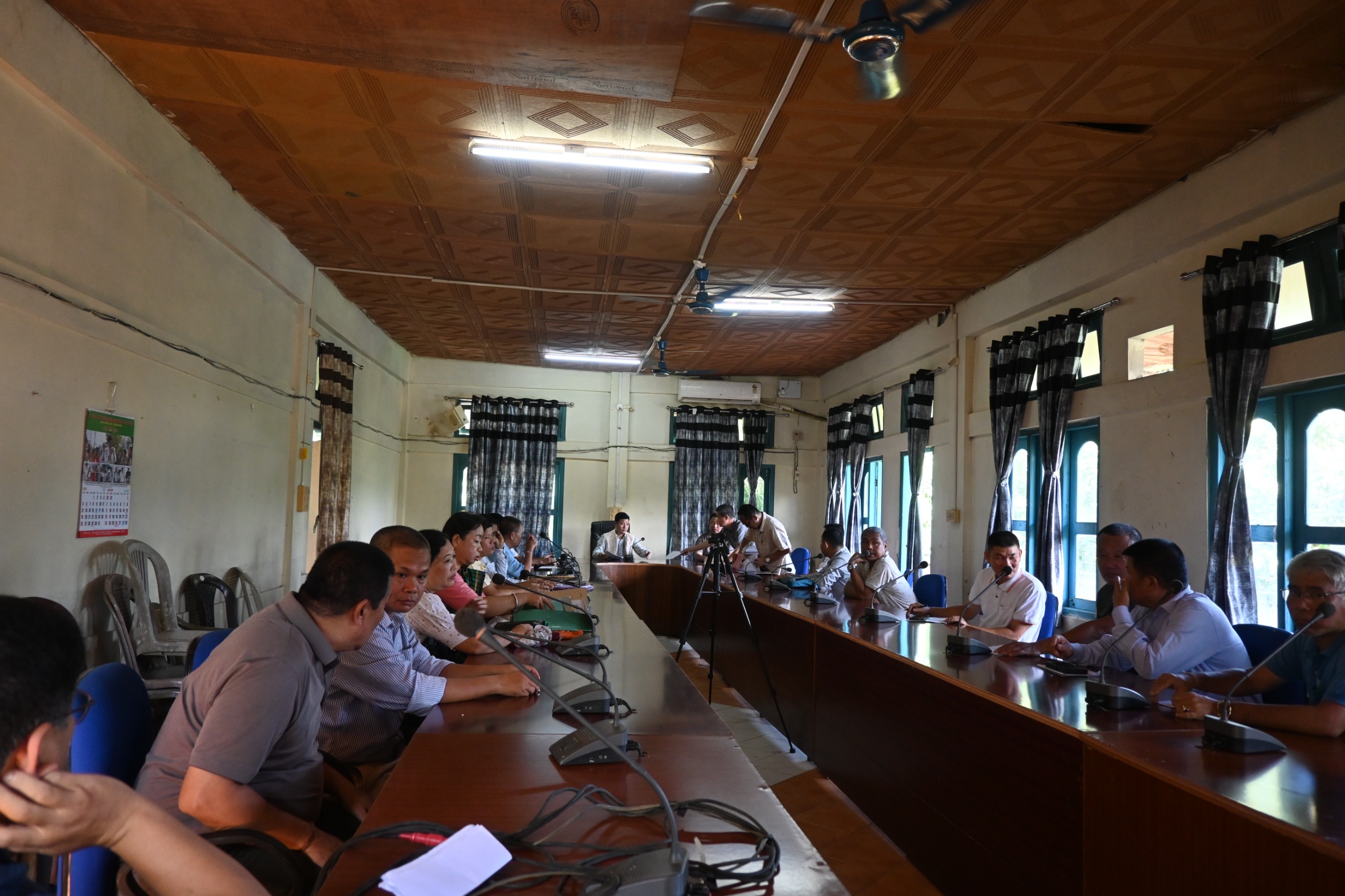
𝐊𝐀𝐌𝐀𝐋𝐀𝐍𝐀𝐆𝐀𝐑, 𝟐𝟖 𝐒𝐞𝐩𝐭𝐞𝐦𝐛𝐞𝐫, 𝟐𝟎𝟐𝟔: A meeting on educational administration in the Chakma Autonomous District Council (CADC) was held on Sunday, September 27, 2026, at the CADC Rest House Conference Hall, Kamalanagar, under the chairmanship of Dg. Doymoy Daveng Chakma, Hon’ble Executive Member in-charge of Education, CADC.
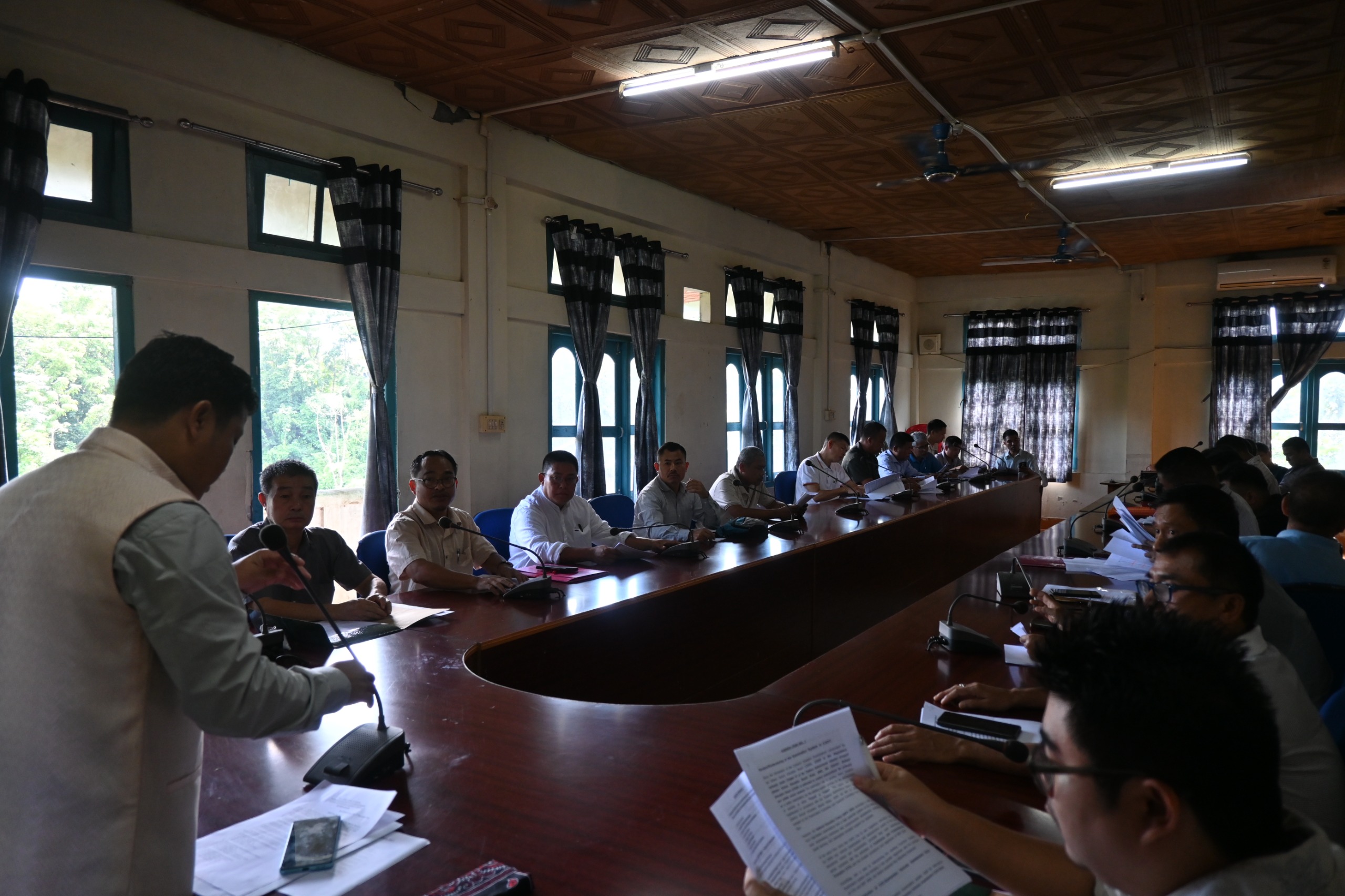
The meeting was attended by officials and staff of the Education Department, District School Education Board (DSEB), Adult Education Department and other concerned departments, along with representatives of the Chakma District Council Teachers’ Association, Mizoram Chakma Students’ Union and resource persons.
In his opening remarks, the Chairman outlined the purpose of the meeting and emphasised the need for clear, appropriate and practical rules and regulations to ensure effective, accountable and progressive administration. He stressed that educational reforms and administrative measures should be undertaken through consultation and collective deliberation to ensure their effective and sustainable implementation.
The meeting discussed various issues relating to school education, educational administration and proposed reforms in CADC. Several important resolutions were taken in this regard.
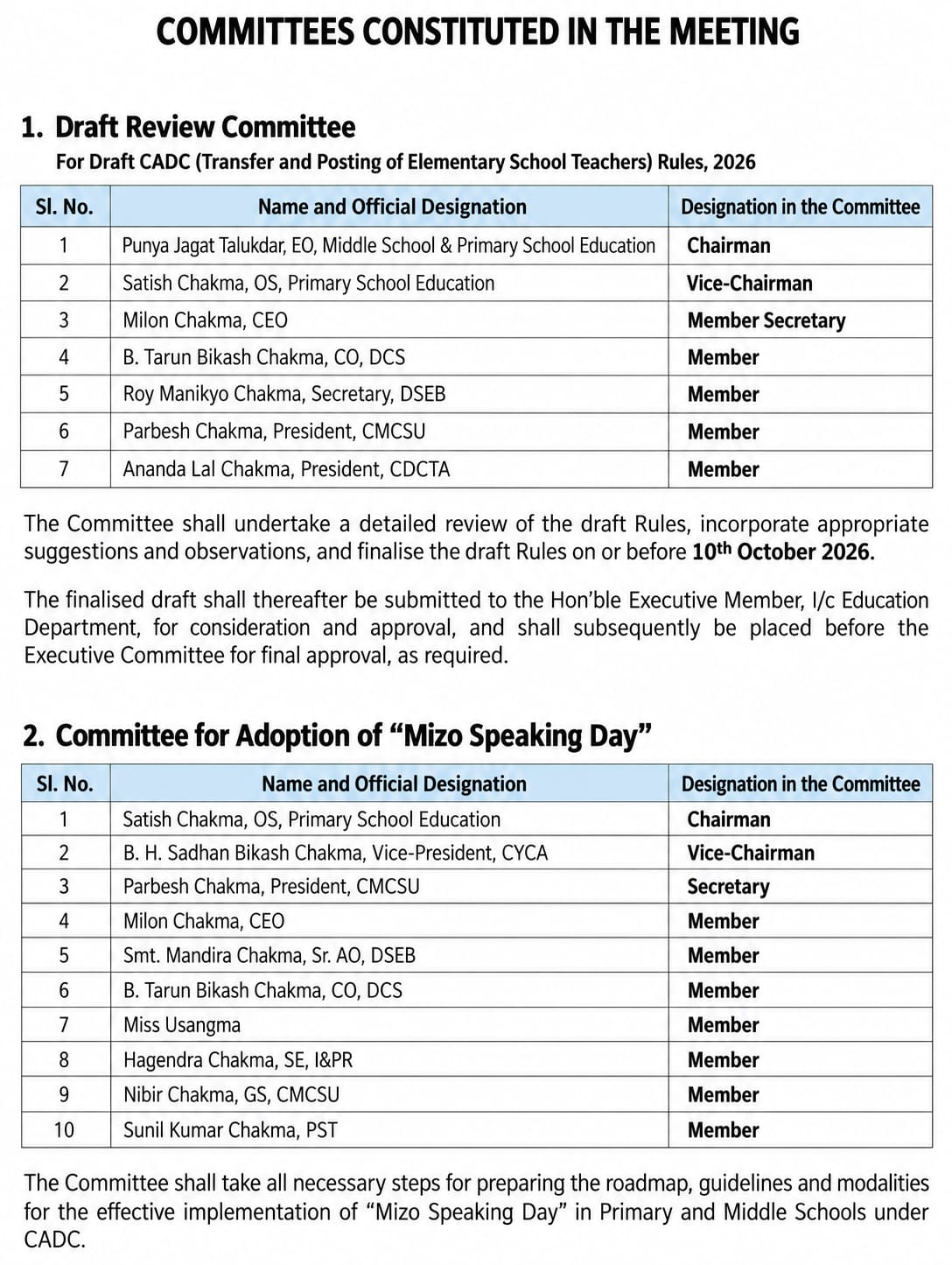
The draft Chakma Autonomous District Council (Transfer and Posting of Elementary School Teachers) Rules 2026 was unanimously approved in principle. A Draft Review Committee was constituted under the chairmanship of Dg. Punya Jagat Talukdar, Education Officer, Middle School Education, to undertake further scrutiny of the draft, incorporate suggestions and observations, and finalise it by October 10, 2026. The final draft will thereafter be placed before the Executive Committee for consideration and approval.
The meeting also resolved to adopt and implement the National Education Policy (NEP) in CADC from the academic session 2027–28, in alignment with the policy framework and guidelines of the Government of Mizoram. The DSEB and the concerned Education Departments will undertake the necessary preparatory measures and issue guidelines for its implementation.
On literacy, it was decided that a Literacy Drive/Programme in CADC should be undertaken in a systematic and coordinated manner. The implementation of the programme will be subject to the decision of the Executive Committee and the availability of necessary funds. The concerned authority has been directed to prepare an appropriate framework for further consideration.
The meeting further resolved to introduce 10 minutes of Anapana Meditation every Friday in all Primary and Middle Schools under CADC. The Education Department will prepare the necessary guidelines and modalities for implementing the initiative in schools.
Another decision taken at the meeting was to observe every Wednesday as “Mizo Speaking Day” in all Primary and Middle Schools under CADC, with a view to providing students with regular opportunities to learn and practise the Mizo language. A Committee for Adoption of Mizo Speaking Day has been constituted under the chairmanship of Dg. Satish Chakma, OS, Primary Education Department, to prepare the roadmap, guidelines and modalities for its implementation.
Concluding the meeting, the Chairman emphasised the importance of collective responsibility, consultation and coordinated efforts for the effective implementation of the decisions taken. He thanked all the participants for their contributions and cooperation.
No. 62/2026-27
CADC envisages support for technology innovators through SELCO Foundation, Bangalore
𝐊𝐚𝐦𝐚𝐥𝐚𝐧𝐚𝐠𝐚𝐫, 𝟐𝟒 𝐒𝐞𝐩𝐭𝐞𝐦𝐛𝐞𝐫, 𝟐𝟎𝟐𝟔: The chief Executive Member of Chakma Autonomous District Council (CADC), Dg. Nirupam Chakma met Dgb. Usma Chakma of SELCO Foundation, Bangalore at his office on the 24th September 2026 (Thursday) to discuss a range of issues relating to the support for technology innovators of CADC from SELCO Foundation.
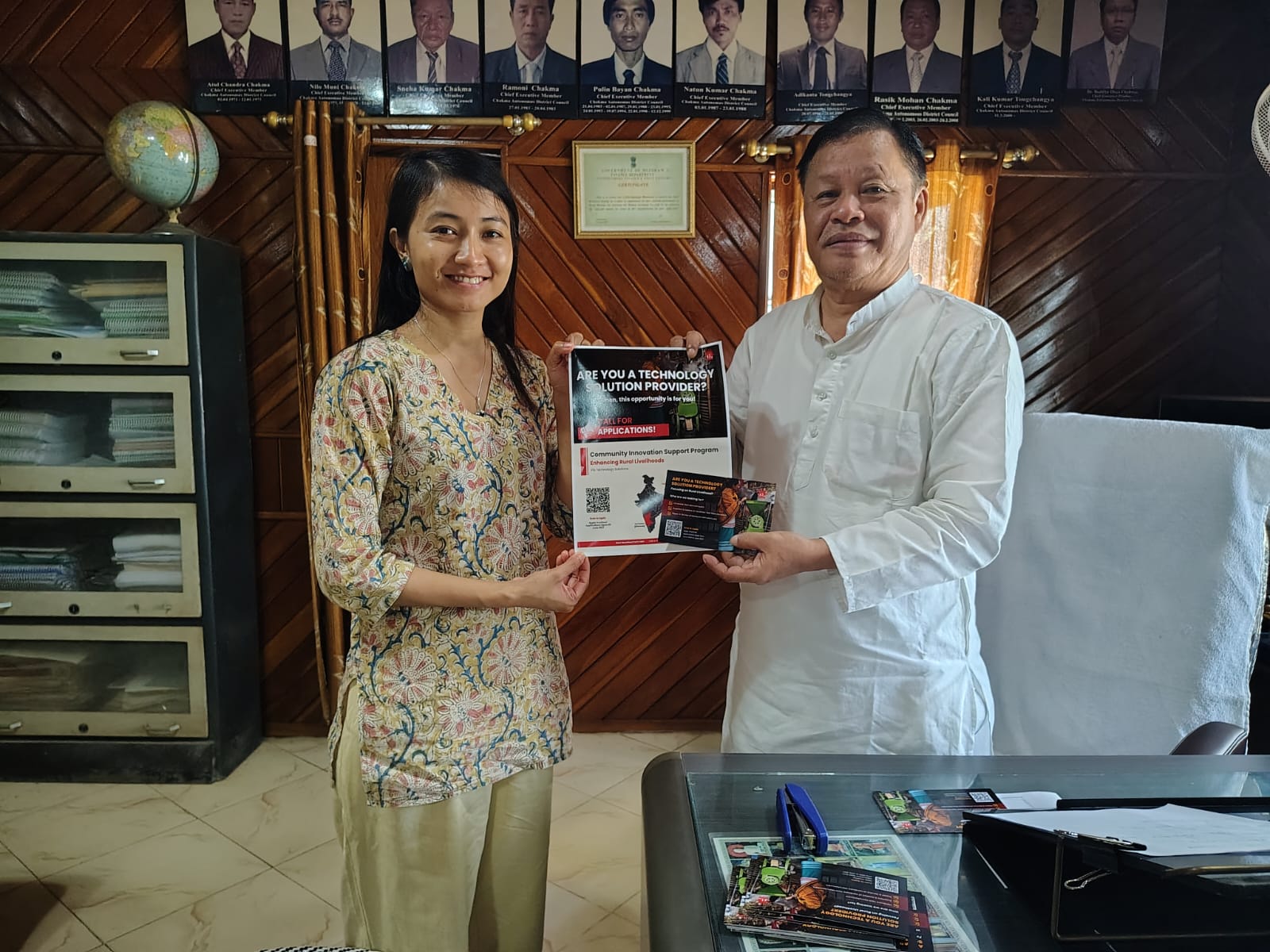
During the meeting, she briefed the Chief Executive Member on SELCO Foundation’s plan to implement its Community Innovation Support Program – Enhancing Rural Livelihoods via Technology Solutions within the Chakma Autonomous District Council area.
The programme seeks to engage local and regional technology solution providers, including hardware manufacturers, suppliers, dealers, and repair and service providers, to connect rural livelihood activities with appropriate technology solutions for improving productivity and income generation.
Applications under the programme will remain open till June 2027. Interested technology solution providers may refer to the attached programme flyers for details of the application process or contact +𝟗𝟏 𝟗𝟔𝟖𝟔𝟔𝟐𝟏𝟖𝟐𝟕 for further information. SELCO Foundation is eager to partner with and support Manufacturers and Supply & Service providers.
Interested innovators may apply through the link – https://forms.gle/WkdPS5uqyKU4yKiL9
ACB Conducts Anti-Corruption Awareness Campaign in Kamalanagar
Kamalanagar, 24 September 2026: The Anti-Corruption Bureau (ACB), Mizoram, conducted an Anti-Corruption Awareness Campaign at the CADC Arts & Culture Hall, Kamalanagar, Chakma Autonomous District Council (CADC) today. The programme was hosted with a view to creating awareness among public servants about corruption, their responsibilities under the law and measures to prevent corrupt practices in public administration.
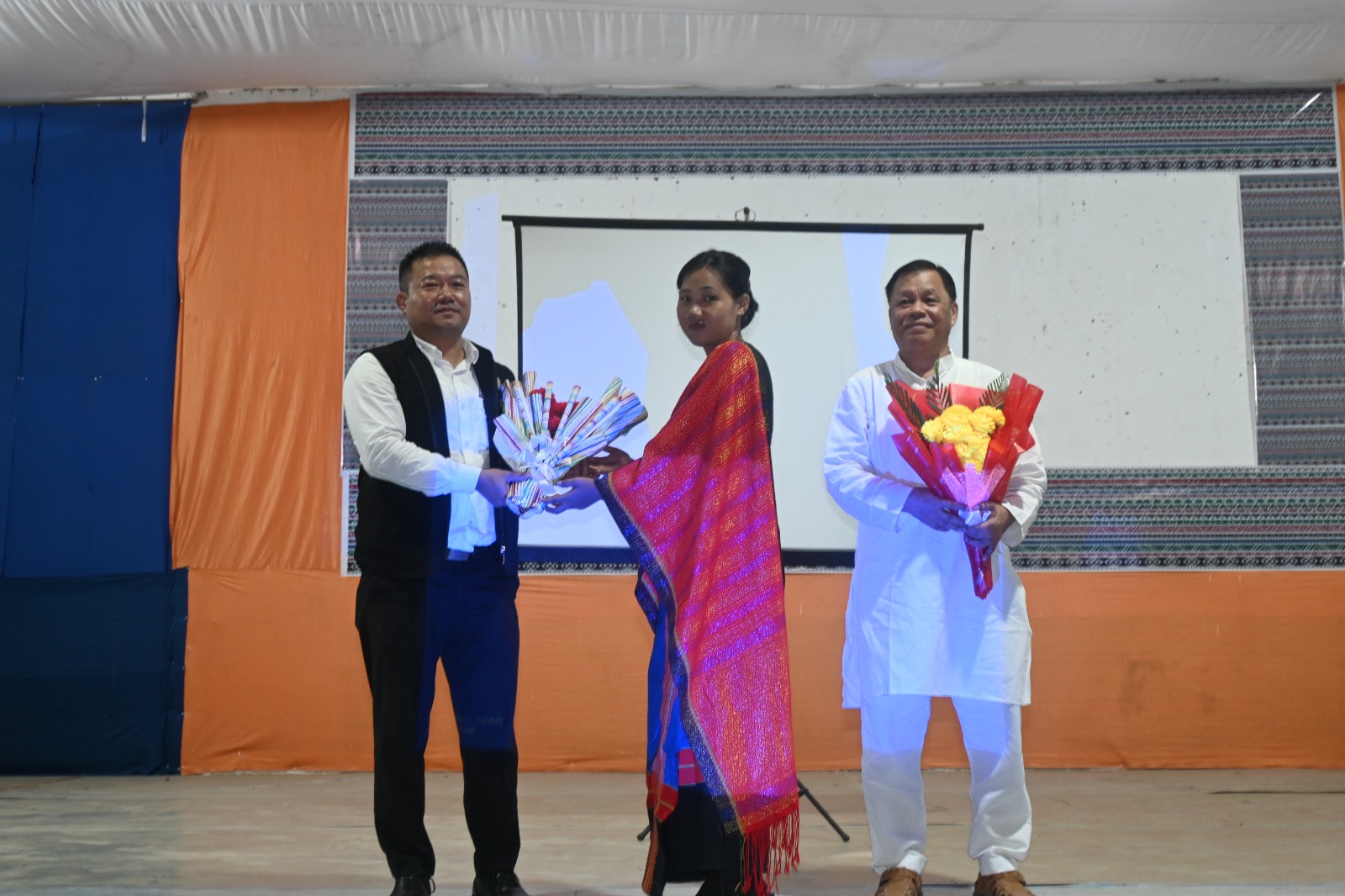
The programme was chaired by the Executive Secretary, CADC, Dg. Pronit Bikash Chakma. Dg. Nirupam Chakma, Chief Executive Member (CEM), CADC, attended as the Chief Guest, while Dg. Supreme Raj Chakma, Executive Member in-charge of Law & Judicial Department, CADC, was the Guest of Honour.
In his welcome address, Dg. Pronit Bikash Chakma appreciated the ACB for organising the campaign at CADC. He said such initiatives play an important role in strengthening public institutions by creating awareness about rules, regulations and the legal framework required to prevent lapses and administrative deficiencies. He said greater awareness would help reinforce transparency, integrity and ethical conduct among public servants.
Addressing the gathering, Dg. Nirupam Chakma called for the need for public servants to understand their responsibilities in preventing corruption. He said that unless people understood their responsibilities, they could not effectively speak against corruption. Referring to the importance of the rule of law in a democracy, he said every person, particularly those holding public office, should be aware of the law while discharging their duties.
He added that actions carried out beyond the limits prescribed by law could amount to corruption and emphasised the importance of legal awareness in the fight against corruption. “If we don’t know the rule of law, then mistake is certain,” he said.
The CEM called upon all government servants to maintain integrity in the discharge of their duties and said that there should be zero tolerance for corruption in CADC. He also said that an Annual Confidential Report (ACR) system would be introduced in CADC to help prevent cases of out-of-turn promotion, pay upgradation and other irregularities.
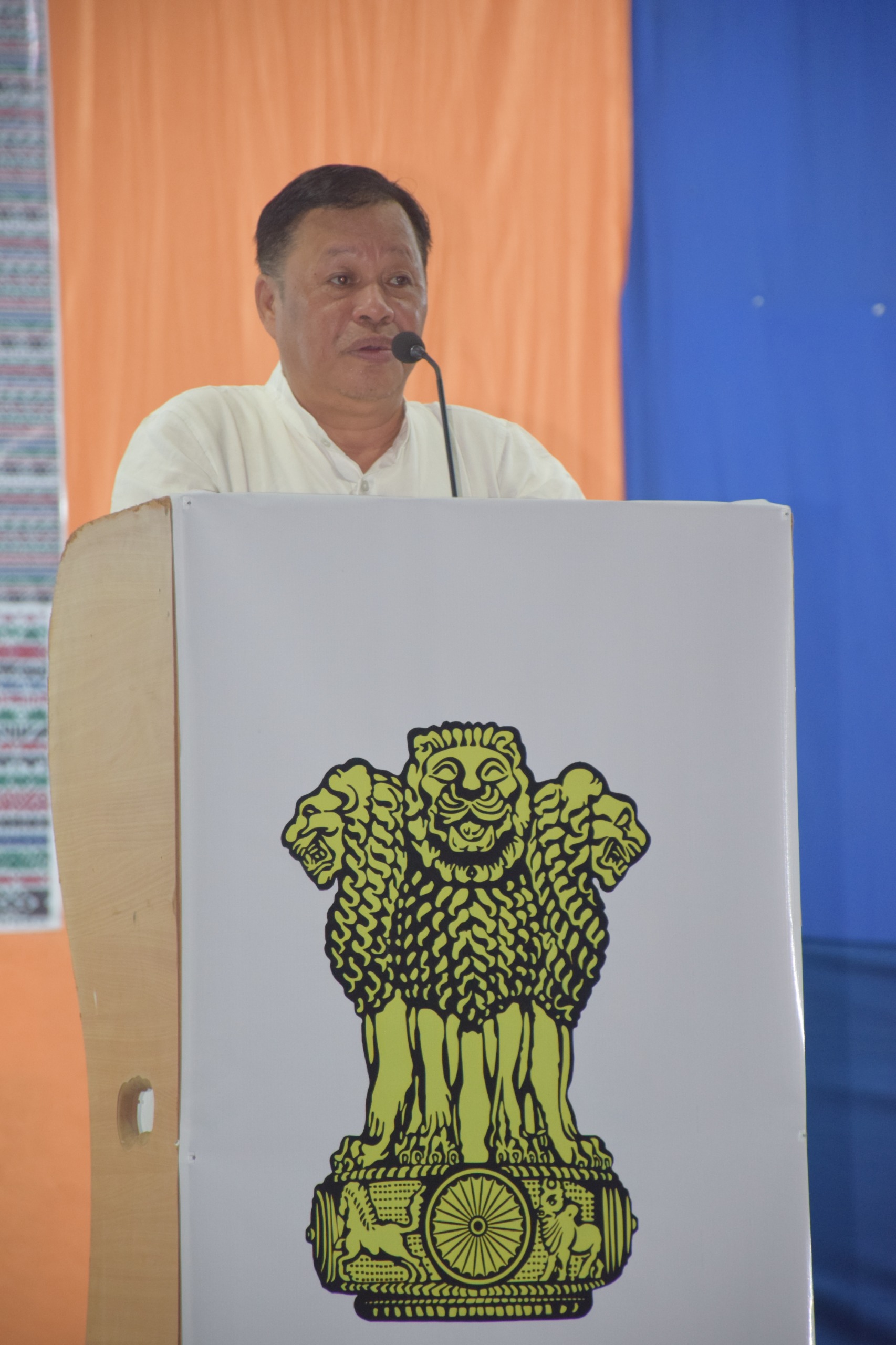
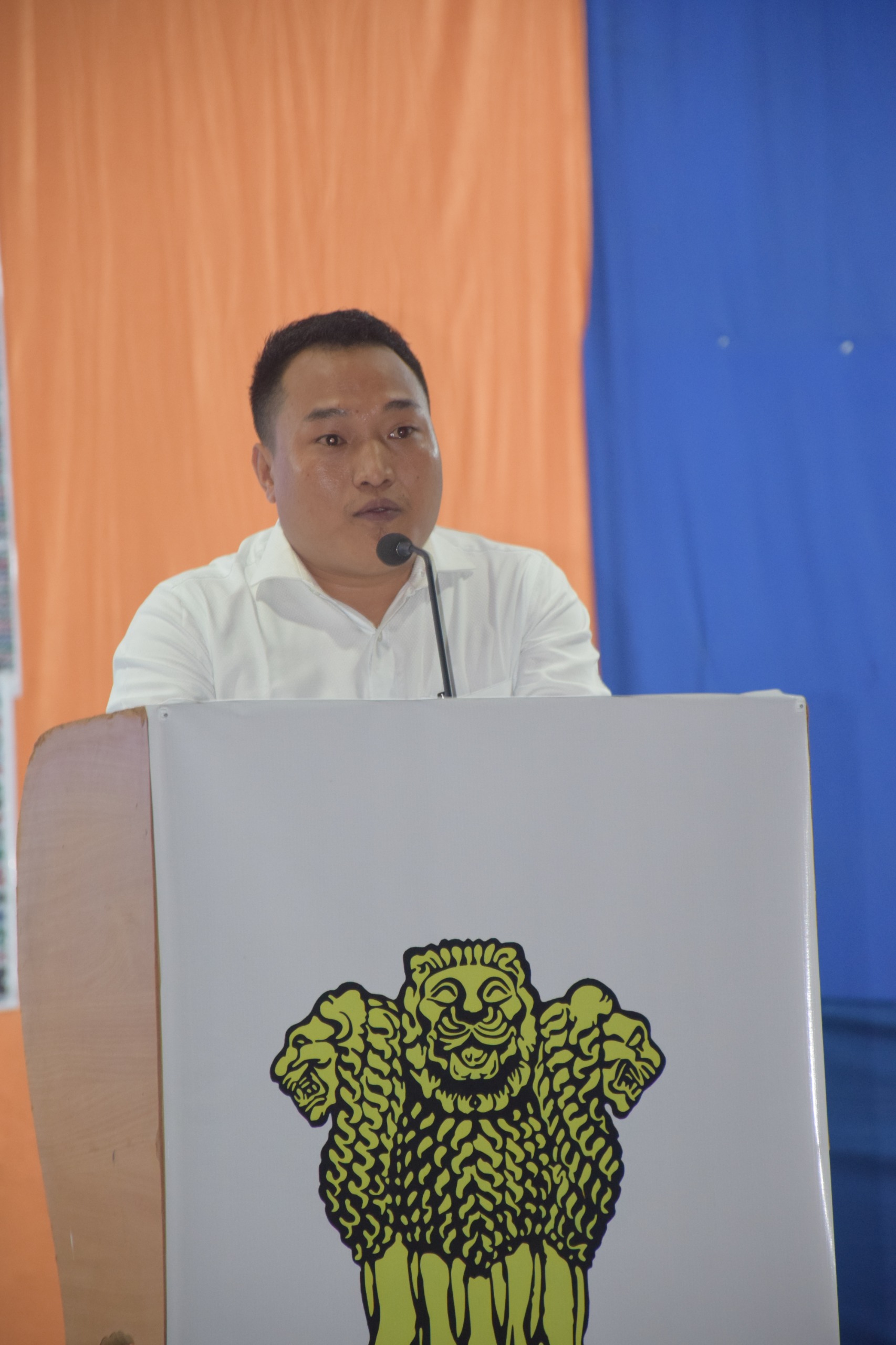
Dg. Supreme Raj Chakma, in his address, spoke about different forms of corruption, including abuse of power and intentional delay in the discharge of official duties. He stressed the importance of integrity in public administration, stating that administration could not be reformed without integrity.
He said the present Executive Committee of CADC was taking steps towards greater transparency in the administration, including through the constitution of Departmental Promotion Committee (DPC). He also pointed out that government plans and policies could not be implemented by the government alone, as government employees had a key role in their implementation.
Dg. Supreme Raj Chakma said the Executive Committee was making efforts to improve transparency and boost public confidence in the CADC administration. He further said that the Executive Committee is intending to make the declaration of assets compulsory for CADC employees.
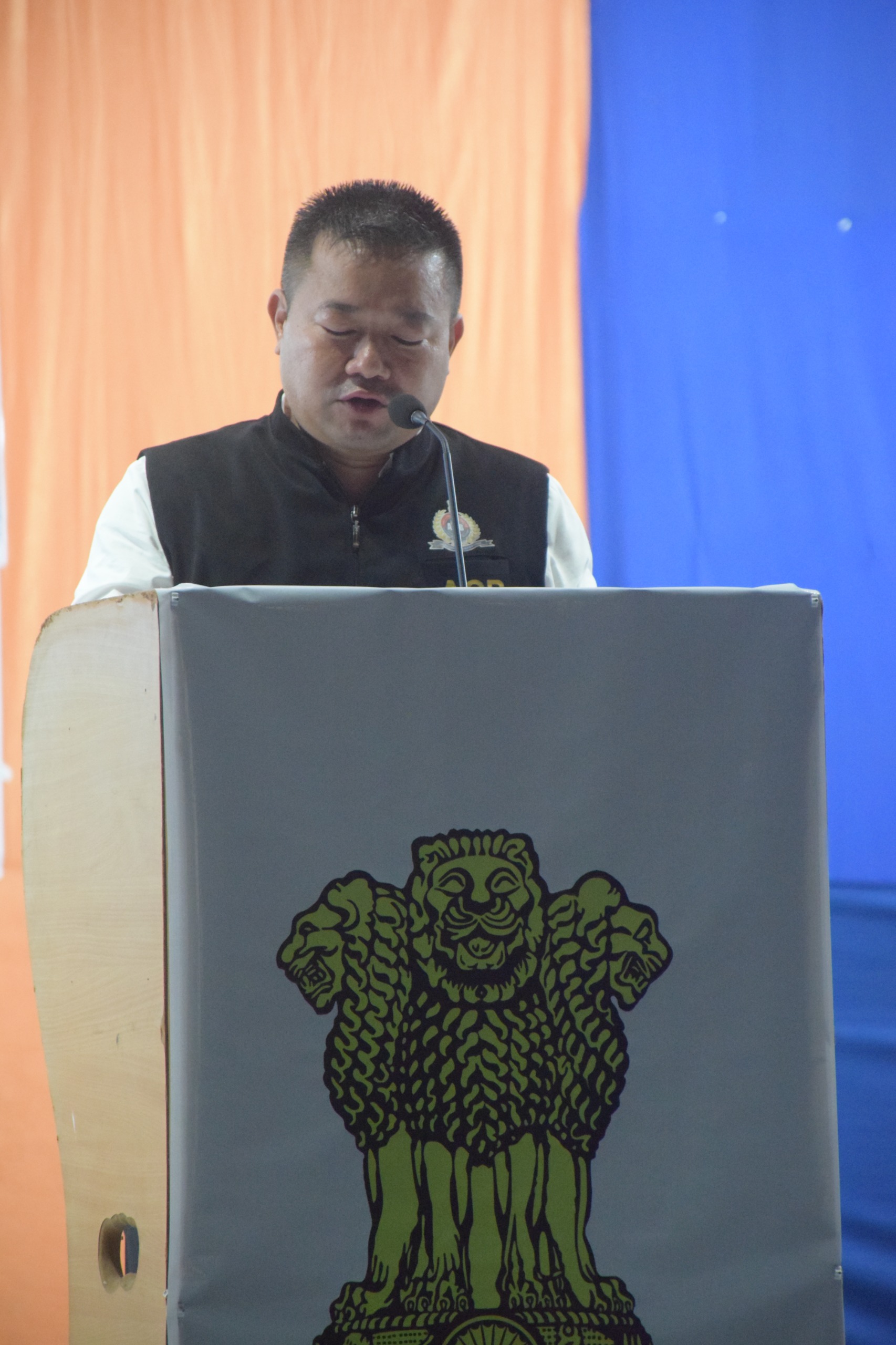
Pu Zarzoliana, Additional Superintendent of Police, ACB, Mizoram, delivered the main address through a PowerPoint presentation on anti-corruption measures. The presentation covered the nature and impact of corruption, situations in which corrupt practices may occur in CADC, the rules and duties of government servants, relevant legal provisions under the Bharatiya Nyaya Sanhita (BNS), procedures for reporting corruption and the Whistle Blowers Protection Act, 2011.
He also explained the importance of preventive vigilance and the role of government employees in preventing corruption. Participants were informed about the appropriate channels for reporting suspected corrupt practices and the safeguards available under the relevant provisions of law.
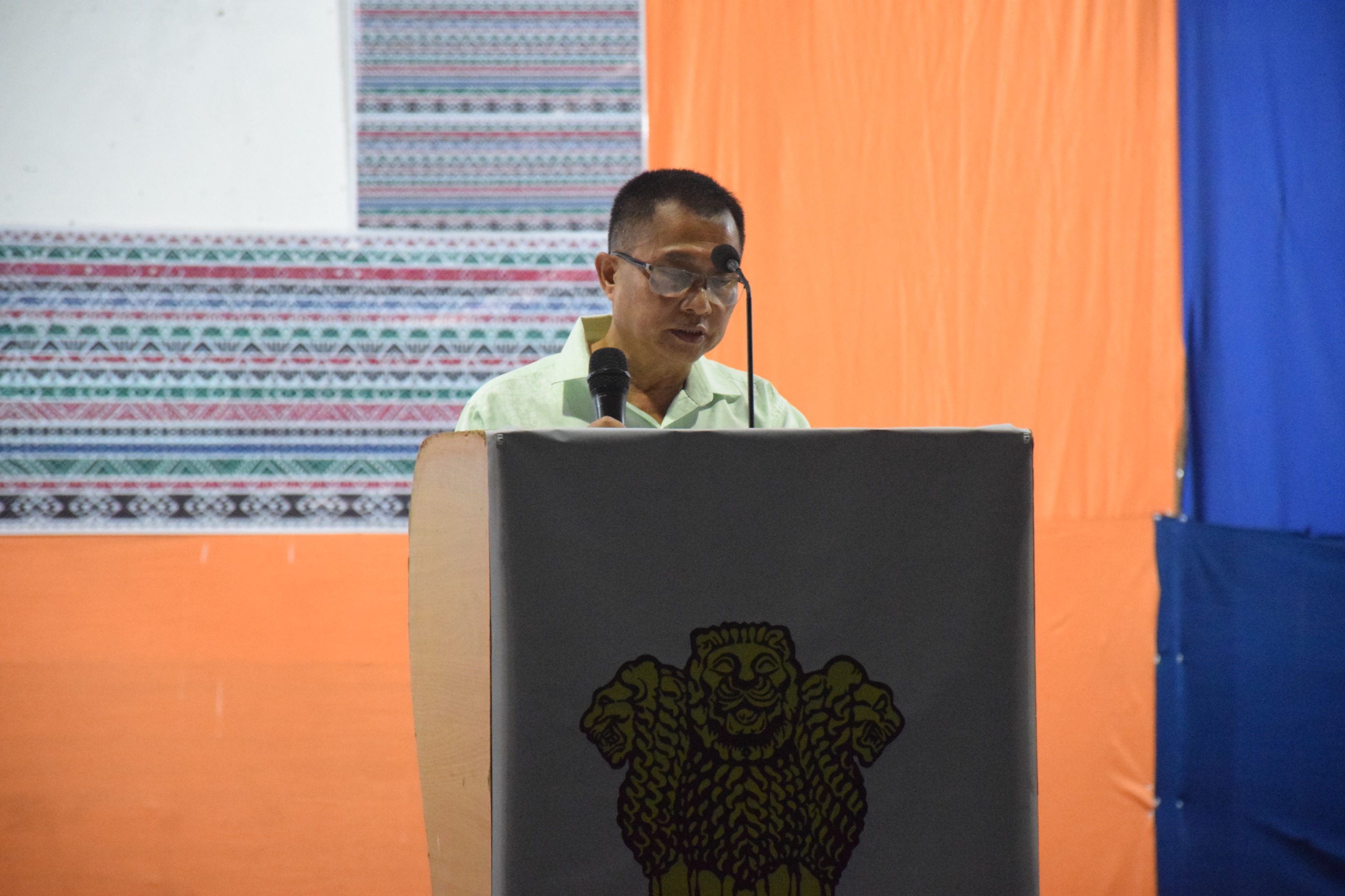
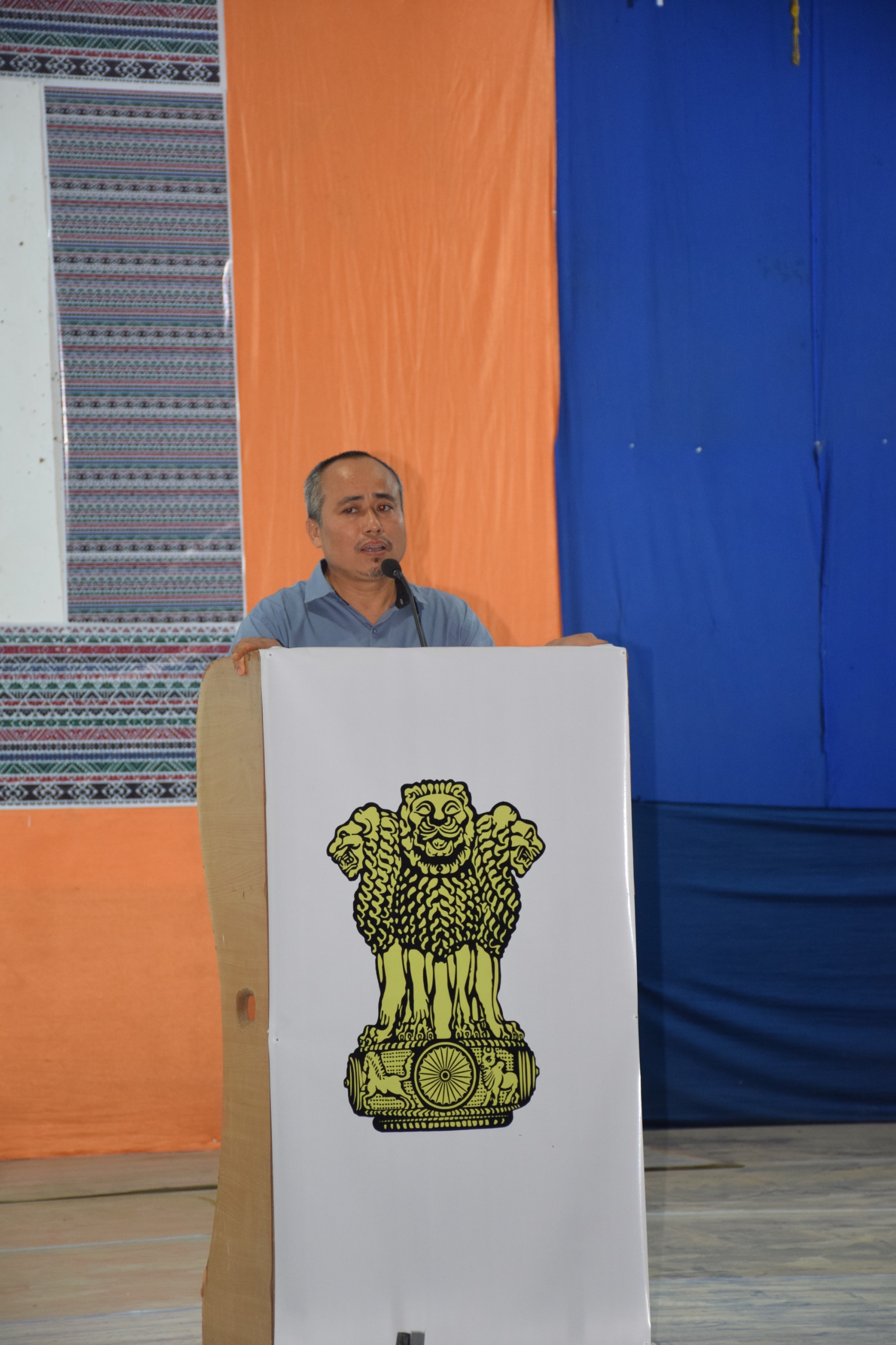
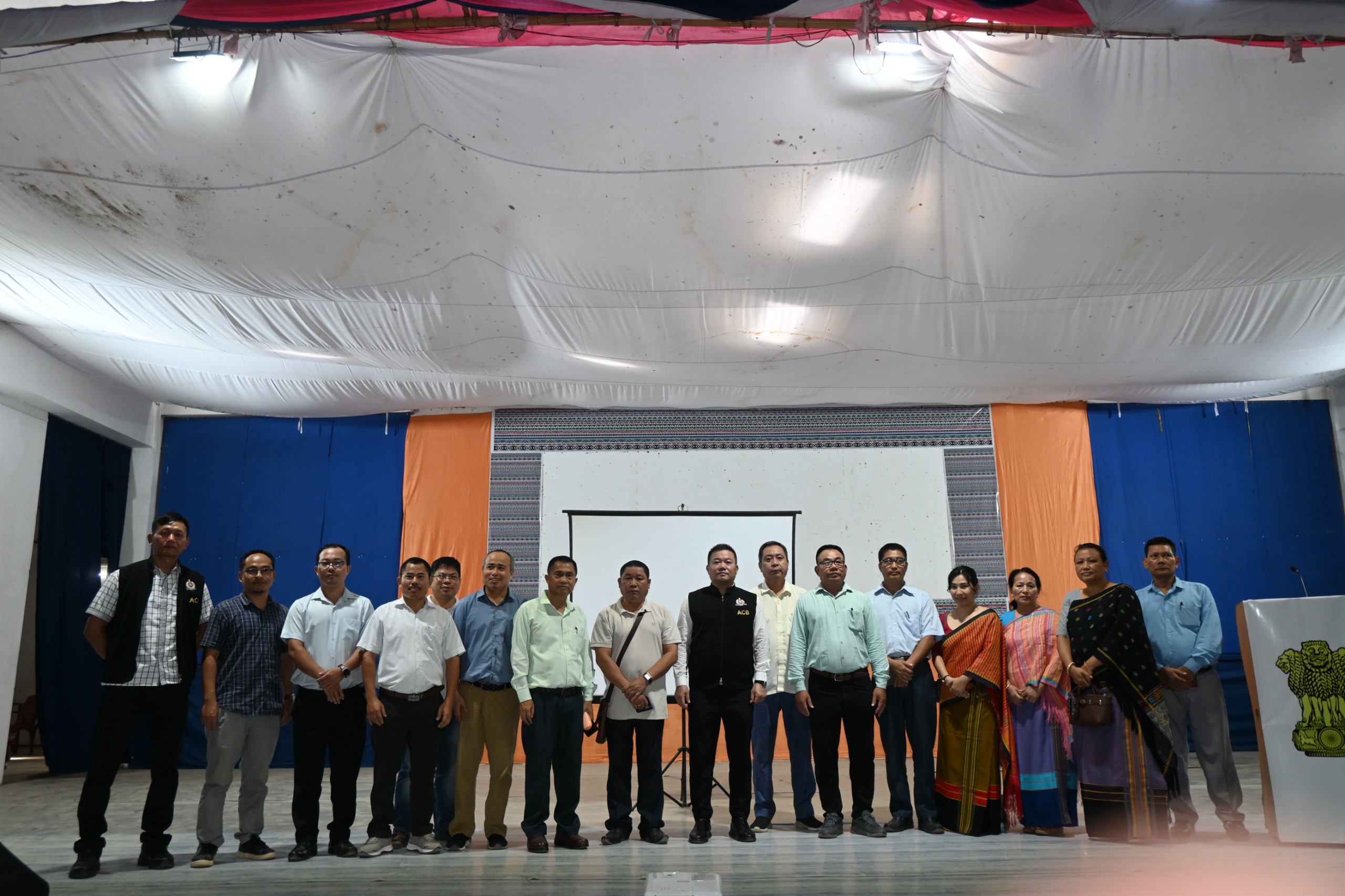
As part of the awareness campaign, a pledge board was also placed at the venue, where the participants were encouraged to put their signatures as a commitment to refrain from corrupt practices and uphold integrity in the discharge of their official duties
The programme was attended by Members of the District Council, former Councillors, representatives of NGOs, and Group A, B and C employees of CADC, including teaching staff, Heads of Departments and other officers and staff.
The programme concluded with a vote of thanks proposed by Dg. Prabin Chakma, Planning & Development Officer (P&DO), CADC.
No.58/2026-27
EFCC Notification: Comparative statement of broomgrass tender opened on 23 Sept 2026
The Environment, Forests and Climate Change Department, Chakma Autonomous District Council has release the comparative statement of broom grass tender opened on the 23rd September 2026
Renaming of Duichuni Factory to Mineral Water Bottling Plant.
In pursuance of decision made by the Executive Committee Meeting held on 10th & 11th August, 2026 under Additional Item No. 5(Five), the Executive Committee of Chakma Autonomous District Council is pleased to change the name of “DUICHUNI FACTORY” located at Kamalanagar-IV into “MINERAL WATER BOTTLING PLANT”.
Further, the Executive Committee of Chakma Autonomous District Council is also pleased to convert the assets of “DUICHUNI FACTORY” into the said “MINERAL WATER BOTTLING PLANT”. Henceforth, all necessary correspondences may be communicated accordingly.
Notification: Constitution of Departmental Promotion Committee (DPC) – 2026
As decided in the meeting of the Executive Committee, held on 16th September, 2026, the standing Departmental Promotion Committee (DPC) to examine the cases of promotion, financial upgradation etc. in respect of both general and teaching staff is hereby re-constituted as under:


